Briefing · August 19, 2026
UK Space Energy Initiative Pushes for Orbital Solar Demo as Launch Costs and Terrestrial Efficiency Close In
The Space Energy Initiative is pressing Westminster for co-funding an orbital space-based solar power demonstrator — here's what the numbers actually say.
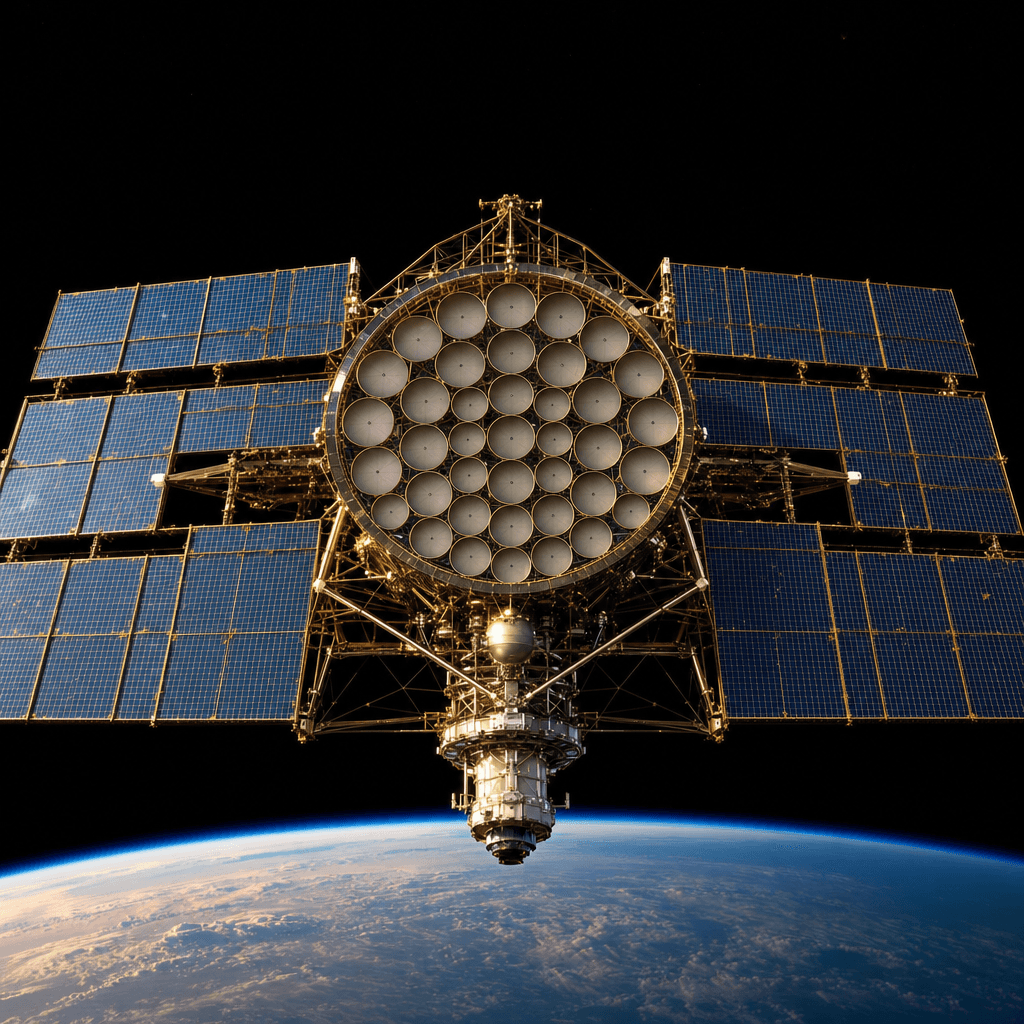
What did the Space Energy Initiative actually ask for?
The Space Energy Initiative (SEI) called on the UK government to co-fund an orbital space-based solar power (SBSP) demonstrator in a push made public on 17 August 2026 — a formal request for joint public-private financing to move a prototype from technology readiness level (TRL) ground testing into low Earth orbit. The SEI's orbital demonstrator request is the clearest signal yet that the UK SBSP community believes the concept is ready to leave the desk and enter the sky, but a request for co-funding is not a funded programme, and an orbital demonstrator is not a power plant.
To be precise about what an orbital demonstrator proves and does not prove: it would validate end-to-end wireless power transmission from orbit to a ground receiver at engineering scale, likely in the tens of kilowatts range, but it would not demonstrate the gigawatt-scale continuous power delivery, the full assembly-in-orbit logistics, or the economics needed to compete with a terrestrial grid. Every stakeholder reading the SEI's call should hold those distinctions firmly.
How does the launch cost trajectory affect SBSP economics?
Launch cost is the structural barrier that has killed every previous SBSP business case, and the trajectory is genuinely changing. Sending one kilogram to orbit cost roughly $55,000 USD in the Space Shuttle era; reusable rockets have brought the theoretical figure down to a few thousand dollars per kilogram today, and some projections place full-reusability Starship below $100 USD/kg — though that sub-$100 USD/kg figure remains a projection, not a contracted price as of mid-2026.
Space-based solar power works by converting sunlight into electricity using photovoltaic arrays in geostationary orbit (GEO), converting that electricity into microwave or laser energy, transmitting it to a ground-based rectenna or receiver, and reconverting it to usable electricity — each step carrying an efficiency penalty. The end-to-end transmission efficiency of current microwave SBSP designs runs roughly 20–30%, meaning the economics are acutely sensitive to both specific power (watts per kilogram of hardware launched) and launch cost per kilogram. At $55,000 USD/kg, no SBSP architecture closes financially. At $1,000 USD/kg — roughly where some Falcon 9 rideshare pricing sits today — the arithmetic becomes far less punishing, though still not competitive with utility-scale terrestrial solar plus storage without additional performance gains.
What does the terrestrial solar benchmark look like right now?
The comparison point is also moving fast, and not in SBSP's favour on pure efficiency. Solar manufacturer Tandem PV has secured nearly $1 billion USD in Letter of Intent agreements for perovskite-silicon 4T modules, with a roadmap to 37% panel efficiency by 2030 at a rate of approximately 2% efficiency gain per year, as reported on 14 August 2026. Terrestrial solar's improving efficiency does not negate SBSP's core value proposition — continuous, weather-independent power accessible to any latitude — but it does raise the bar that an orbital system must clear on delivered cost per kilowatt-hour to justify the complexity premium.
The SEI's co-funding request lands in this specific competitive environment: launch costs falling but not yet at the level that closes the SBSP business case; terrestrial solar efficiency climbing toward 37% by 2030; and UK government budgets under significant pressure. A government decision to co-fund an orbital demonstrator would not be a commercial bet — it would be a strategic TRL investment to preserve optionality, on the premise that the launch cost curve continues downward and that the UK wants a domestic capability stake if and when the economics do close.
The implication for your next decision
If you are a programme officer or investor evaluating whether to engage with the SEI's call, the honest framing is this: the orbital demonstrator the SEI is requesting would answer a genuine engineering question — can the UK supply chain assemble and operate a power-transmitting satellite at representative scale? — and that answer has value even if commercialisation is a decade away. What it will not answer is whether SBSP can beat a 37%-efficient perovskite-silicon panel paired with grid-scale storage on levelised cost of energy (LCOE). That question requires launch costs to actually reach, not merely project, the sub-$500 USD/kg range, and it requires demonstrating specific power figures well above current hardware. Engage with the SEI's demonstrator on TRL grounds; do not fund it on near-term LCOE grounds, because the numbers do not yet support that case.
Created with AI assistance. Editorial oversight: Juergen Ritzek. See our AI disclosure.