Briefing · October 21, 2026
Poland's Artemis Hedging Is a Warning Shot for Lunar Surface Power Programs
A Polish minister's public doubts about U.S. Artemis commitments signal that partner nations are quietly repricing political risk in lunar surface power planning.
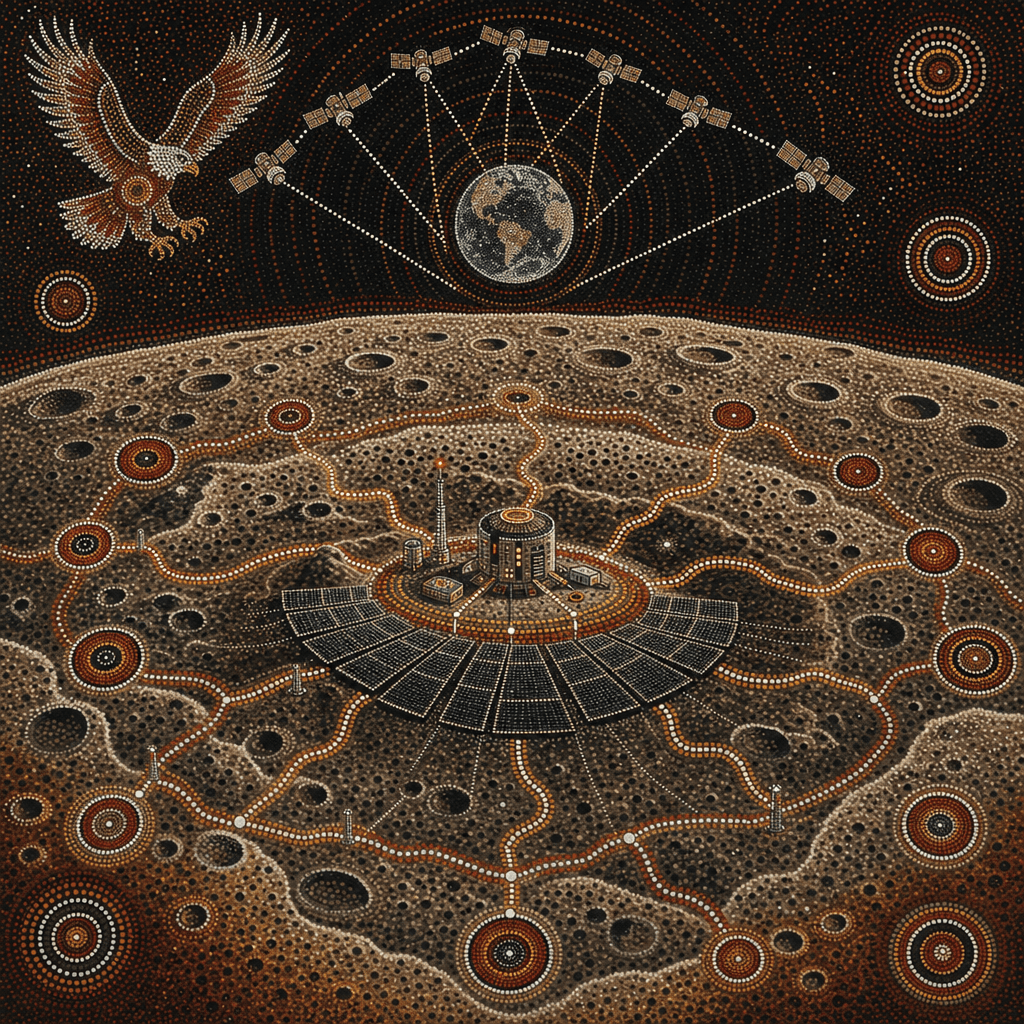
What Did Poland Actually Say About Artemis?
Poland remains interested in participating in NASA's Artemis programme, but a senior Polish government official has placed political and budgetary uncertainty in the United States on the record as a formal planning risk. In a 13 October parliamentary response, Polish Deputy Minister of Development and Technology Michał Jaros stated that U.S. political instability complicates long-term commitments to Artemis — a direct, ministerial-level acknowledgment that partner-nation confidence in the programme's continuity is eroding, as reported by European Spaceflight (2024-10-13).
That sentence matters to anyone working on lunar surface power. Artemis is not just a crewed landing programme; it is the institutional scaffolding on which surface power demonstrations — from NASA's Fission Surface Power (FSP) project to solar array deployments — depend for manifest slots, landing site selection, and international co-funding. When a partner government signals hedging at the ministerial level, procurement timelines and joint R&D agreements downstream become harder to defend to a finance committee.
Why Does Partner-Nation Confidence Affect Surface Power Timelines?
Surface power on the Moon — the beat covering solar arrays, fission reactors, and power distribution for habitats and ISRU equipment — requires years of advance planning coordinated across multiple space agencies and industrial primes. No single nation's budget covers the full stack. The European Space Agency (ESA) SOLARIS initiative, for instance, has framed space-based solar power (SBSP) and lunar surface power as complementary technology pathways; both depend on a stable Artemis architecture to provide the destination and the regulatory framework.
Space-based solar power (SBSP) is the concept of converting sunlight into electricity in orbit, transmitting it as microwaves or laser light to a receiving station, and reconverting it to grid power — a chain that requires high specific power (watts per kilogram of deployed hardware) and end-to-end transmission efficiency high enough to beat the terrestrial solar-plus-storage benchmark on a levelized cost basis. Lunar surface power shares the same photovoltaic and power-management technology base, making Artemis demonstrations directly relevant to SBSP component validation.
The Signal Behind the Hedge
Deputy Minister Jaros's statement is notable not for its novelty — programme watchers have tracked U.S. budget volatility for years — but for its venue: a formal parliamentary answer, on the record, in October 2024 European Spaceflight (2024-10-13). Governments do not put risk language into parliamentary records casually. It signals that the Polish Ministry of Development and Technology is managing expectations with domestic stakeholders and, implicitly, pricing optionality into its Artemis-linked industrial commitments.
For European space companies pitching lunar surface power contracts — whether for photovoltaic arrays, power conditioning units, or fission reactor components — this is a demand-side softening signal. A partner government openly questioning programme continuity will delay signing authority on subcontracts that assume a fixed lunar landing cadence.
Three Practical Implications for Your Roadmap
Technology Readiness Level (TRL) investment sequencing. If Artemis manifest slips — a plausible outcome given the budgetary uncertainty Jaros cited — hardware at TRL 4–6 (component and sub-system validation) that was targeting a 2028–2030 lunar demonstration window may need a bridging plan. That means either a terrestrial analogue demonstration or an Earth-orbit precursor, both of which require separate funding lines.
Diversification of anchor customers. The Commercial Lunar Payload Services (CLPS) programme and ESA's own lunar cargo ambitions offer alternative manifest pathways, but neither carries the power-delivery scale of a crewed outpost. Surface power systems sized for a crewed habitat — on the order of 10 kilowatts continuous as a baseline for early Artemis surface operations — cannot be fully validated on a CLPS-class lander.
Political risk as a line item. Investors and programme officers evaluating lunar surface power ventures should now treat U.S. administration continuity as a quantifiable risk factor rather than background noise. Jaros's statement, delivered in a stable NATO-ally parliament with direct Artemis participation interests, is the clearest public signal yet that this risk is being priced outside Washington.
The immediate action item is straightforward: if your roadmap has a critical-path dependency on an Artemis surface demonstration before 2030, model a twelve-to-twenty-four-month slip scenario now, identify which technology milestones remain achievable on an Earth-orbit or terrestrial testbed, and present that contingency plan to your next funding review before a partner government's hedging becomes your programme's delay.
Created with AI assistance. Editorial oversight: Juergen Ritzek. See our AI disclosure.