Briefing · October 3, 2026
Orbital Data Centers Need Power First — Transporter-18 Just Started That Test
SpaceX's Transporter-18 rideshare carried hardware aimed at solving orbital computing's hardest constraint: getting enough watts to the processor.
What did Transporter-18 actually demonstrate about power in orbit?
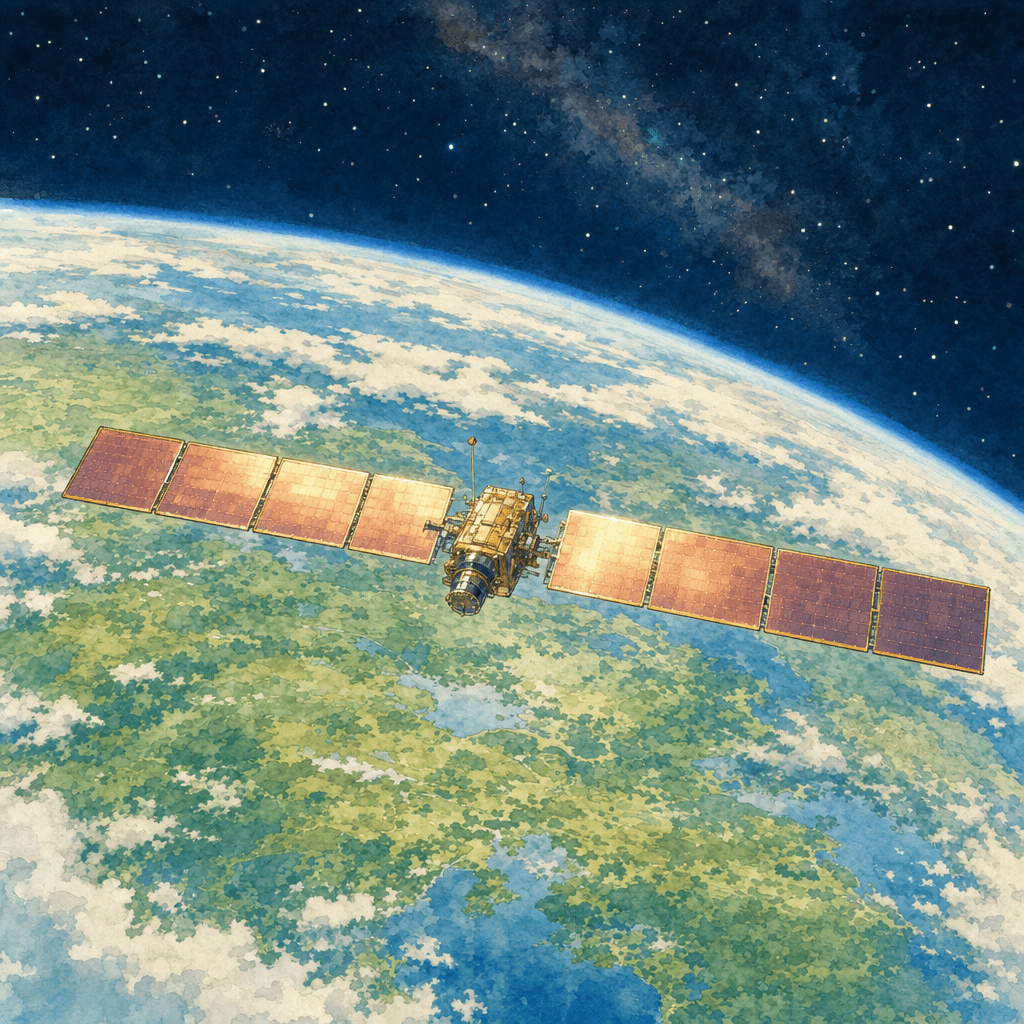
SpaceX's Transporter-18 rideshare was not a random collection of smallsats — it carried a deliberate cluster of payloads focused on a single engineering problem: delivering adequate electrical power to compute hardware operating in low Earth orbit (LEO). Payload Space (2026-10-01) describes the mission's theme explicitly as "getting power to compute in orbit," making Transporter-18 one of the first rideshares organised around the power-architecture question rather than the communications or imaging payload.
That framing matters to anyone tracking the "power in space" beat. Orbital data centers are not a communications satellite with a bigger processor bolted on — they require a fundamentally different power budget, thermal management loop, and power-distribution architecture. Demonstrating those building blocks at the component level in LEO, on a shared-ride manifest, is a Technology Readiness Level (TRL) 4-to-6 step: it proves subsystem function in the space environment, but it does not yet prove integrated system operation at data-center scale or at commercially relevant uptime.
Why does 250 kW per Starlink satellite matter for the orbital power conversation?
The numbers from next-generation Starlink make the power-architecture question concrete. NextBigFuture (2026-10-01) reports that SpaceX's planned Starlink AI satellites are each designed to draw 250 kilowatts (kW) — a figure that exceeds the total continuous power generation of the International Space Station (ISS), which produces approximately 75–90 kW across its solar arrays. At 10 terabits per second (Tbps) of bidirectional throughput per satellite, with a roadmap toward more than 100 Tbps per satellite, the power-per-bit ratio demands solar arrays, power conditioning, and thermal radiators that dwarf anything flying today.
Power in space explained: Space-based solar power generation works by deploying large photovoltaic arrays that collect sunlight — available 24 hours a day in high-enough orbits — and converting it to electricity that runs onboard systems. In LEO, eclipse periods limit continuous generation, making battery and power-management architecture critical. For an orbital data center, the constraint is not energy availability in aggregate but peak power delivery to processors, which is why the watts-per-kilogram (W/kg) figure of the solar array and the efficiency of the power distribution bus are the engineering levers that define feasibility.
That 250 kW figure per satellite is a design target, not a demonstrated on-orbit result. No public source has confirmed a Starlink AI satellite has launched, charged to full power, and operated compute loads at that level. Investors and program officers should treat it as a disclosed specification, not a validated milestone.
What the Transporter-18 experiments prove — and what they do not
The Cowboy Space Reason-1 satellite, highlighted by Payload Space (2026-10-01) as part of the Transporter-18 manifest, represents the early-stage, component-level end of the demo-to-deployment curve. What a successful LEO experiment of this type proves: that specific power hardware can survive launch loads, operate through thermal cycling, and deliver electrons to a compute node in the space environment. What it does not yet prove: end-to-end power system efficiency at multi-kilowatt scale, inter-satellite power distribution, or economic viability against the terrestrial benchmark of roughly $30–50 per megawatt-hour for solar-plus-storage on the ground.
The economic math for orbital computing power is not driven by the terrestrial solar benchmark the way space-based solar power (SBSP) for grid delivery is — the value proposition is latency and geography, not energy cost per kilowatt-hour. But the capital cost of deploying watts in orbit, dominated by launch cost per kilogram and specific power of the array, still defines whether an orbital data center can generate a return. At current Falcon 9 rideshare pricing, getting a kilogram to LEO costs roughly $6,000 USD. An array delivering 100 W/kg — a reasonable near-term target — means paying $60 per watt of capacity just for launch, before the array, power electronics, or compute hardware are costed.
What this means for your roadmap
If your organisation is evaluating orbital compute infrastructure — whether as a customer, a supplier of power subsystems, or an investor — the Transporter-18 cluster is a signal worth tracking precisely because it is unglamorous. The teams flying power-to-compute demonstrations on shared rideshares today are accumulating the TRL heritage that bankable orbital data center contracts will require in the 2028–2032 window. The 250 kW Starlink AI satellite specification sets a power-demand benchmark the industry must build toward. The gap between a Reason-1 component demo in 2026 and a 250 kW operational node is large, but the direction is unambiguous: orbital computing's first infrastructure problem is electrical, and the experiments to solve it have begun.
Created with AI assistance. Editorial oversight: Juergen Ritzek. See our AI disclosure.