Briefing · October 8, 2026
NASA's New Power Lab and Lunar Grounding Challenge Signal a Serious Push for Surface Power
NASA's Glenn Research Center procurement and a new spacesuit-charging challenge mark concrete steps toward workable lunar surface power infrastructure.
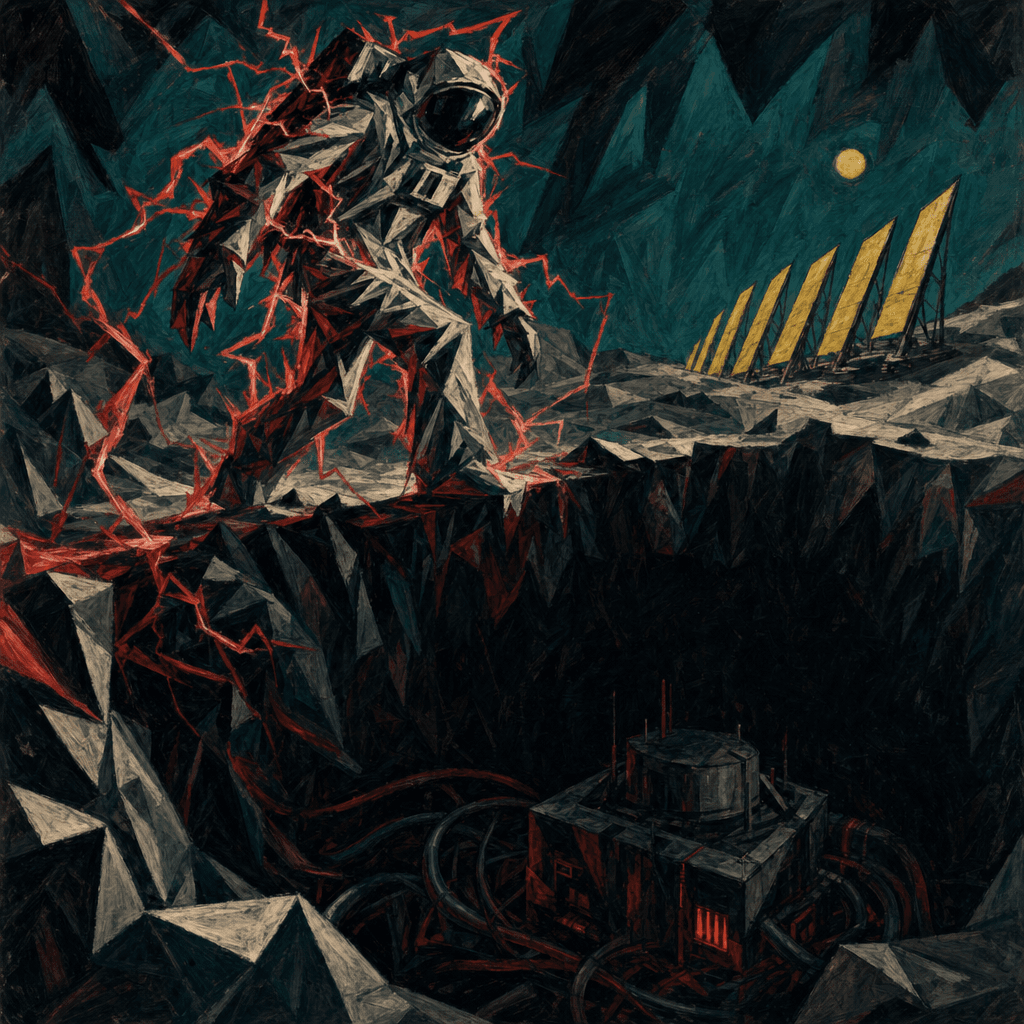
Two NASA actions this month—one a facility procurement, one a crowdsourced engineering challenge—draw a clearer line between the vision of lunar surface power and the unglamorous hardware problems that must be solved before any watt reaches a lunar outpost.
NASA's Glenn Research Center in Cleveland is actively soliciting Phase 1 design proposals for a new Aerospace Power Systems Laboratory (APSL), a dedicated facility for testing and developing aerospace power systems including associated site work, infrastructure, and systems integration, according to the NASA Glenn Research Center (2025). That procurement sits at roughly Technology Readiness Level (TRL) 1–2 on the facility side: it proves institutional commitment to a test infrastructure, not to a deployed power system. But Glenn has historically been the proving ground for solar arrays, fuel cells, and power management hardware that eventually fly — so a modern APSL is a forcing function for the component-level work the Artemis surface power roadmap needs.
What is the Lunar Grounding Challenge, and why does it matter for surface power?
The second action is more operationally specific. NASA's Center of Excellence for Collaborative Innovation has opened the Lunar Grounding Challenge (2025), targeting a hazard that is easy to underestimate: as an astronaut traverses the lunar South Pole, tribocharging from walking on the regolith and plasma charging from the ambient plasma environment generate dangerous electrical potentials on the spacesuit. The problem intensifies sharply when crew members enter Permanently Shadowed Regions (PSRs) — the same craters that hold the water ice that makes the South Pole strategically valuable. In those dark zones, a spacesuit can accumulate a substantial negative potential, which poses a direct electrostatic discharge risk to both the crew member and any surface power equipment they approach or operate.
This is not an abstract electromagnetic compatibility concern. Any surface power architecture — whether fission-based like NASA's Fission Surface Power (FSP) project or solar-plus-storage — will involve cables, connectors, and power conversion hardware that crew must interact with. An uncontrolled electrostatic discharge event near high-voltage power distribution infrastructure is a mission-ending risk. Solving grounding at the suit level is a prerequisite for crewed access to surface power hardware, particularly in the PSR locations where continuous solar illumination is absent and fission or stored energy becomes the only viable supply.
How does this fit on the demo-to-deployment curve?
Both actions are pre-competitive: they build the test infrastructure and solve enabling problems rather than demonstrate a delivered kilowatt. To place them on the curve honestly — NASA's FSP project targets a 10 kW demonstrator on the lunar surface by the early 2030s, and the APSL would be a domestic test bed for components feeding that program. The Lunar Grounding Challenge addresses the human-factors layer that sits between any power source and the crew who will use it.
The plain-language version: Triboelectric charging — the same physics that makes a balloon stick to a wall after you rub it — occurs whenever a spacesuit boot scuffs lunar regolith. On Earth, charge bleeds off harmlessly through moist air and conductive ground. On the Moon, there is no atmosphere and the regolith is a poor conductor, so charge accumulates until it discharges suddenly. "Grounding" a spacesuit means providing a controlled path for that charge to dissipate safely, a solved problem in terrestrial electrical engineering that has no direct analogue in a vacuum environment with plasma present.
The megaconstellation congestion building in low Earth orbit (LEO) — SpaceNews (2026) reports Amazon alone wants more than 5,000 satellites in orbit, with Blue Origin proposing another 5,400 — is a separate but relevant pressure. Power-dense satellite design is increasingly constrained by orbit, spectrum, and launch cadence, not by solar cell efficiency alone. The FAA licensed launch decline in FY2026 is already pushing operators toward higher-density satellite architectures — a dynamic that amplifies demand for better power-per-kilogram on orbit, reinforcing the case for advancing power systems test infrastructure on the ground.
For program officers and investors tracking the Artemis surface power timeline, the immediate decision point is this: the APSL procurement and the Lunar Grounding Challenge define two near-term contract and prize opportunities where technically specific proposals — ones grounded in electrostatic discharge modeling, power system integration, and vacuum-environment materials — will have a genuine edge over concept papers.
Created with AI assistance. Editorial oversight: Juergen Ritzek. See our AI disclosure.