Briefing · October 6, 2026
Europe's Launch Gap Is a Space Solar Bottleneck — And €2.7M Won't Close It
ESA's fresh funding for RFA at SaxaVord highlights how Europe's chronic launch deficit threatens every SBSP and orbital power roadmap.
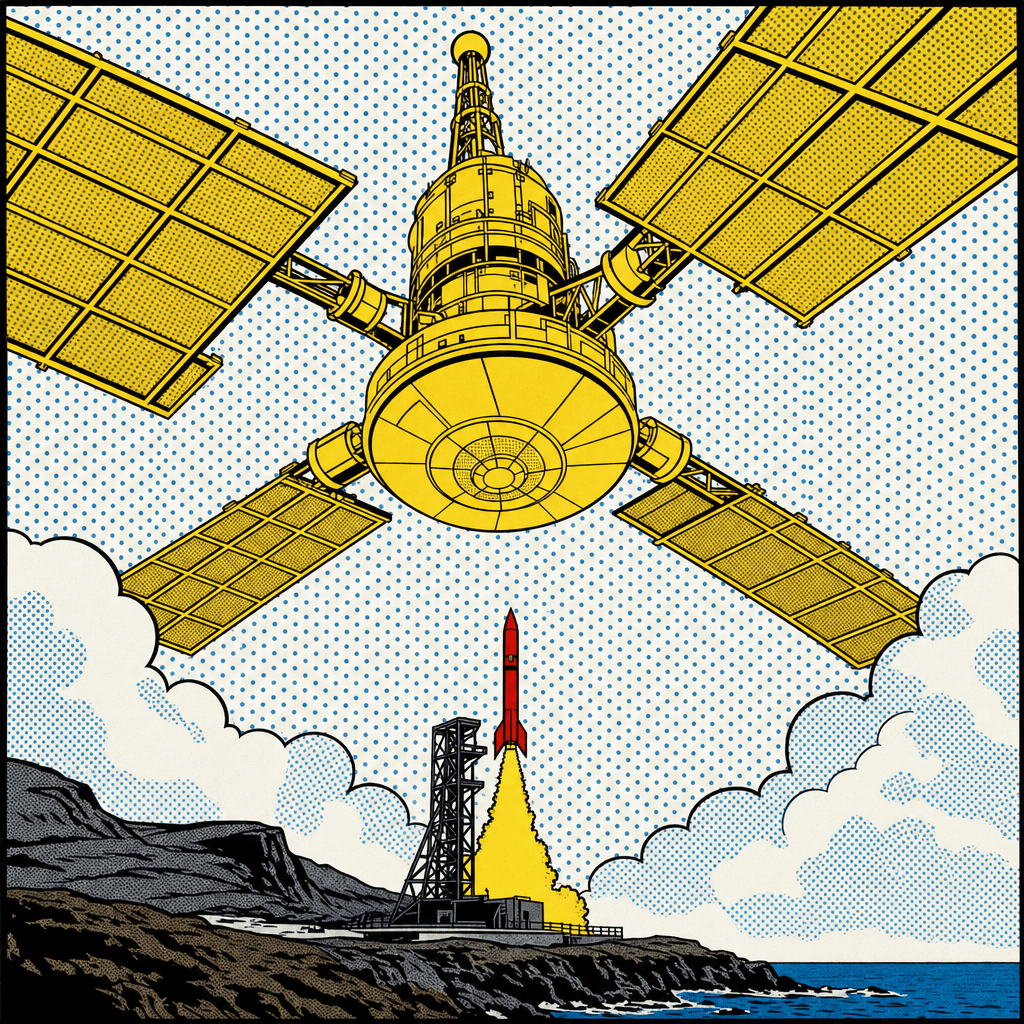
What Did ESA Just Fund, and Why Does It Matter for Power Architectures?
The European Space Agency (ESA) has awarded Rocket Factory Augsburg (RFA) a €2.7 million contract amendment to build out launch and testing infrastructure at SaxaVord Spaceport in Scotland, with static fire tests expected to resume in the near term, according to European Spaceflight (2026-09-30). That is a real milestone — money in hand, a named pad, a named rocket — but €2.7 million is squarely in the category of infrastructure sustaining, not infrastructure scaling. For anyone building a space-based solar power (SBSP) program or an orbital power architecture that depends on affordable, high-cadence European launches, the number that matters is not the grant size; it is the launch rate RFA can plausibly achieve, and when.
SBSP is the concept of collecting solar energy in geostationary orbit — where sunlight is available roughly 99% of the time — converting it to microwave or laser energy, and transmitting it to receivers on Earth. Reaching commercial relevance requires launching tens of thousands of tonnes of hardware at costs measured in hundreds of euros per kilogram, not thousands. The gap between today's European launch capacity and that requirement is the core constraint on every European SBSP roadmap, including ESA's SOLARIS initiative.
How Far Behind Is Europe on Launch Cadence?
The scale of that gap is visible in the raw numbers. The SpaceX Falcon 9 executed approximately 160–170 launches in 2025, delivering an estimated 2,500–3,000 tonnes to low Earth orbit (LEO) per year in reusable mode, according to Next Big Future (2026-10-01). No European rocket currently operates at even 10% of that cadence. Reaching more than 20 launches per year from a single rocket family is historically rare — the Falcon 9 is the only vehicle to exceed 50 launches per year — and most new entrants take a decade from first flight to that kind of operational tempo, as Next Big Future (2026-10-01) documents with decades of historical data.
RFA's RFA ONE is a small launcher targeting LEO; it has not yet completed a static fire campaign at SaxaVord as of this writing. Competitors with a plausible path to first flight in 2027 remain in the single-digit-launches-per-year territory for the foreseeable future. That is fine for satellite telecommunications and Earth observation — markets where a dozen launches a year is commercially viable. It is categorically insufficient for the gigawatt-scale SBSP constellations that ESA SOLARIS and the U.K. Space Energy Initiative have sketched on paper.
What Does This Mean for the SBSP Deployment Curve?
Placing the RFA funding on the demo-to-deployment curve: this is infrastructure investment at Technology Readiness Level (TRL) 3–4, enabling a static fire and eventual first orbital attempt. A successful first flight would advance RFA to TRL 6. Moving from a first orbital flight to a launcher flying 20-plus times per year — the minimum cadence that begins to matter for any SBSP mass-delivery scenario — typically requires five or more additional years of operational refinement and booster reuse development, based on the historical pattern every orbital-class vehicle has followed.
The implication is not that RFA's progress is unimportant; European launch sovereignty has genuine strategic value, and a functional SaxaVord pad diversifies risk for small-satellite customers. But anyone benchmarking a European SBSP business case against a 2035–2040 deployment window needs to be honest: unless Ariane 6 achieves genuine reusability (currently unplanned) or a European heavy-lift reusable entrant emerges from outside the current pipeline, the tonnes-to-orbit equation for SBSP will depend heavily on non-European launch providers for at least the next decade.
The terrestrial comparison sharpens the urgency. Utility-scale solar photovoltaic (PV) paired with four-hour lithium-ion storage is now being contracted in sunbelt regions at below €50 per megawatt-hour, according to widely reported 2025 procurement data. Any SBSP system must eventually undercut that figure on a levelized cost basis. Launch cost is the largest single variable in that calculation, and Europe currently has no credible path to the high-cadence, low-cost launch infrastructure that calculation requires.
The decision this week is €2.7 million toward a static fire. Your next decision is whether your SBSP or orbital power roadmap needs a European-sovereign launch assumption, or whether the math only closes with a global launch market — and what that means for your industrial partnerships over the next 36 months.
Created with AI assistance. Editorial oversight: Juergen Ritzek. See our AI disclosure.