Briefing · October 23, 2026
DARPA Bets on Autonomous Nuclear Reactor Control for Space — Here's What It Proves
SpaceNukes wins a DARPA Other Transaction agreement to ground-test an autonomous fission reactor controller, a concrete step toward lunar and deep-space surface power.
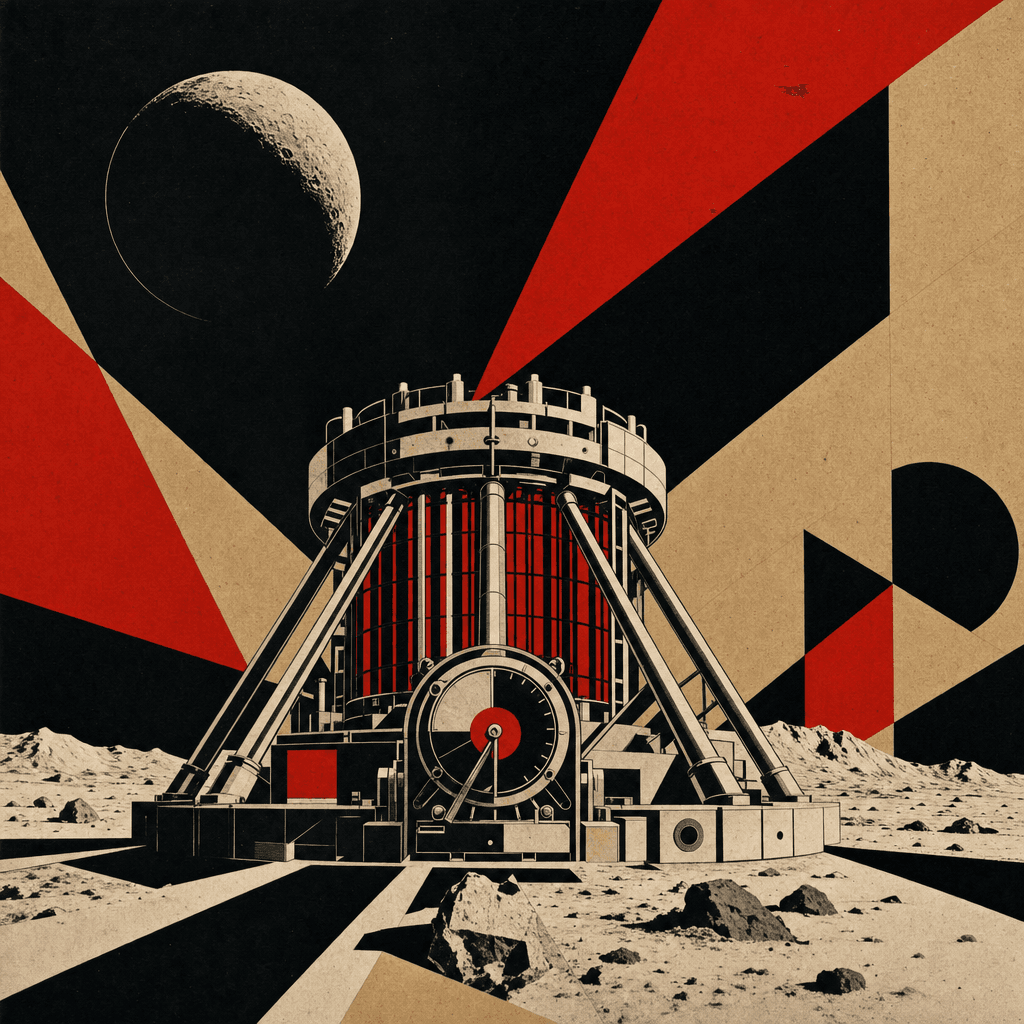
Space Nuclear Power Corporation (SpaceNukes), based in Los Alamos, New Mexico, has received a Defense Advanced Research Projects Agency (DARPA) Other Transaction agreement to conduct a ground test of an autonomous nuclear reactor controller — a hardware milestone that moves compact fission power one step closer to the Moon and beyond.
What did DARPA actually fund, and what does it prove?
The award, announced October 21, 2026, is specifically for a ground test of an autonomous controller — not a flight unit, not an orbital demo, and not a grid-connected power plant. That distinction matters enormously on the demo-to-deployment curve. What a successful ground test would prove is that the control logic can manage reactor startup, load-following, and shutdown without continuous human intervention under simulated space conditions. What it would not yet prove is radiation-hardened performance in the actual thermal and vacuum environment of space, nor the specific power (watts per kilogram) and per-kilowatt cost required to compete with alternatives at the lunar surface. SpaceNews (2026-10-21)
The autonomous controller is the critical subsystem here. Fission surface power for missions beyond low Earth orbit cannot rely on real-time ground commands — round-trip light-time latency to the Moon is roughly 2.6 seconds, and to Mars it stretches to 24 minutes or more. A reactor that cannot self-govern is operationally useless on any world beyond low Earth orbit (LEO).
Why does surface nuclear power matter more than solar at the lunar poles?
Space-based solar power (SBSP) for terrestrial grids and solar arrays for lunar surface operations both depend on line-of-sight to the Sun. Near the lunar poles — the primary target for sustained human presence under NASA's Artemis program — terrain shadowing can cut illumination to near zero for extended periods. A compact fission reactor, by contrast, delivers constant kilowatts regardless of topography or the 14-Earth-day lunar night.
NASA's own Fission Surface Power (FSP) project targets a 10 kW-electric demonstration unit on the lunar surface by the early 2030s. The SpaceNukes DARPA agreement fits logically into that timeline: ground-validated autonomous control is a prerequisite before any space-qualified hardware can be proposed for flight. The Artemis program context also includes ongoing propulsion investment — NASA fired RS-25 developmental engine No. 10001 for 500 seconds (8 minutes, 20 seconds) on October 21, 2026 at Stennis Space Center, underscoring that the agency is still building out the heavy-lift stack needed to deliver large payloads to the Moon in the first place. NASA (2026-10-21)
The plain-language explainer: what "autonomous reactor control" actually means
A nuclear fission reactor generates heat by sustaining a controlled chain reaction in a fissile material such as uranium-235; the autonomous controller is the software-and-hardware system that continuously adjusts control rods or other reactivity mechanisms to hold the chain reaction within safe bounds, match power output to load demand, and execute emergency shutdown — all without a human operator in the loop. In space applications, where communication delays, radiation damage to electronics, and crew unavailability make ground-in-the-loop control impractical, the autonomy of this controller is not a convenience feature; it is the enabling technology.
Placing this on the deployment curve
To calibrate expectations: Technology Readiness Level (TRL) 3–4 work (lab demonstration of components) was already underway across the U.S. fission surface power ecosystem before this award. A successful ground test of an integrated autonomous controller would advance the specific controller subsystem toward TRL 5–6 (component/system validation in relevant environment), leaving at least two more major milestones — space environment qualification and flight demonstration — before any bankable lunar power asset exists.
The competitive landscape for lunar surface power includes solar arrays (already demonstrated on the International Space Station and lunar landers), fuel cells, and radioisotope thermoelectric generators (RTGs). Fission's argument is sustained kilowatt-scale output at constant availability; its risk is cost and schedule. DARPA's Other Transaction mechanism is specifically designed to accelerate development outside traditional Federal Acquisition Regulation constraints, which suggests the agency judges the autonomous controller to be close enough to testable hardware that speed matters more than the usual procurement formality.
What this means for your next decision
If you are a program officer or investor evaluating lunar infrastructure plays, the SpaceNukes DARPA award is the signal to watch the autonomous control subsystem — not the reactor core — as the near-term technical gating item. A successful ground test result, expected before a flight proposal can mature, will be the first defensible evidence that compact autonomous fission is on a credible schedule for the early 2030s lunar surface. Mark the test result date on your roadmap now, and plan your partnership or procurement timeline around it.
Created with AI assistance. Editorial oversight: Juergen Ritzek. See our AI disclosure.