Briefing · August 29, 2026
City Labs' Second Nuclear Demo Signals a Credible Path for Milliwatt-Class Lunar Surface Power
City Labs plans a radioisotope heating unit demo after its first betavoltaic success — a small but measurable step on the lunar surface power roadmap.
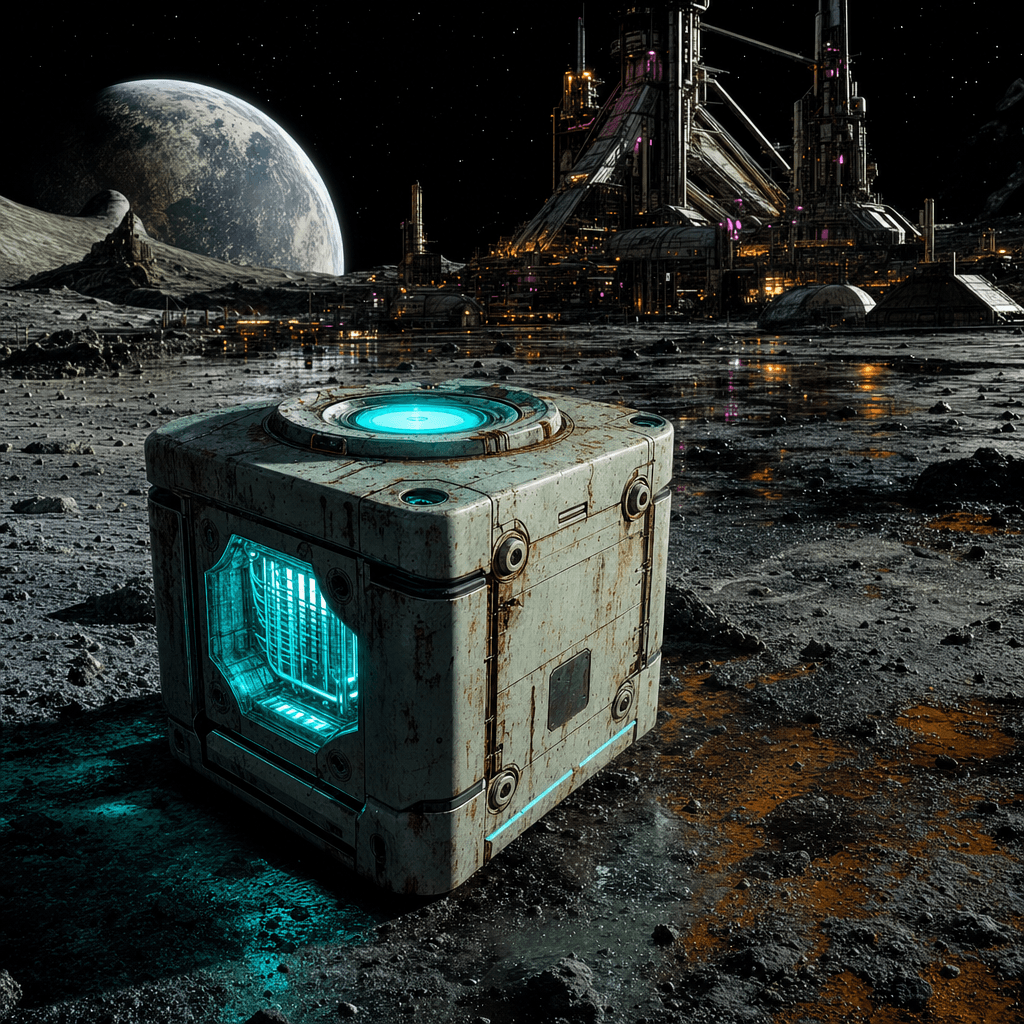
What did City Labs actually demonstrate, and what comes next?
City Labs, a Miami-based nuclear battery company, is preparing a second on-orbit nuclear demonstration focused on its radioisotope heating unit (RHU), following the reported success of its first betavoltaic battery demo in orbit, according to Payload Space (2026-08-27). City Labs' betavoltaic batteries convert the kinetic energy of electrons emitted during beta decay — the slow, predictable disintegration of a radioisotope such as tritium or nickel-63 — directly into electrical current, producing milliwatts of continuous power for years without sunlight, moving parts, or recharging. That first in-space validation places City Labs at roughly Technology Readiness Level (TRL) 6 on the standard nine-point scale — a working prototype demonstrated in a relevant environment — but not yet at TRL 7, the full system demo in the actual operational environment that investors and mission planners need before committing hardware to a lunar lander.
Betavoltaic power, defined plainly: A betavoltaic battery works like a solar cell, except that instead of photons from the Sun exciting electrons across a semiconductor junction, it uses the beta particles (high-energy electrons) emitted by a radioactive isotope decaying inside the cell. The result is a small, steady electrical current that does not depend on solar flux, orbital geometry, or battery cycling — making it particularly attractive for devices that must survive the 14-Earth-day lunar night, where surface temperatures can drop below -170 °C and no photovoltaic array produces a single watt.
Why does a milliwatt-class demo matter for Moon and Mars surface power?
The lunar surface power problem is not monolithic. NASA's large Fission Surface Power (FSP) programme targets 10 kilowatts (kW) of electrical output to support crewed Artemis outposts, but the ecosystem beneath that headline need is full of sub-watt to low-watt loads: sensors, heaters, clocks, beacon transmitters, and the electronics that must stay alive through the night to allow a larger system to restart at dawn. RHUs have flown on dozens of deep-space missions — Voyager, Cassini, Curiosity — as pure thermal devices, keeping electronics warm without generating electricity. City Labs' programme aims to demonstrate an RHU variant that also produces usable electrical output, closing a gap that neither solar arrays nor large reactors address efficiently.
Separately, NASA revised and updated its plume-surface interaction test programme in August 2026, a campaign designed to characterise the hazard of engine exhaust eroding regolith during lunar landings — the same regolith that surface power systems, whether nuclear or photovoltaic, must sit on and survive within. The two programmes are not coordinated by design, but the engineering dependency is real: a power node buried or coated in electrostatically charged ejecta during a nearby landing is a power node that may fail.
On the in-space power front, three EVA spacewalks aboard the International Space Station (ISS) in late August 2026 were used partly to install upgrades to the station's solar arrays and antennae, as reported by NASASpaceFlight.com (2026-08-26). The ISS solar upgrade work is a reminder that even mature orbital power infrastructure requires continuous hardware iteration — a data point for anyone modelling the operations and maintenance cost of future orbital or surface power nodes.
Meanwhile, SolarWindow announced ElectroFlex in August 2026, an 0.85 mm-thick, self-adhesive photovoltaic film with 24.4% cell efficiency targeting aerospace and weight-sensitive applications. At under one millimetre thick, ElectroFlex is the kind of terrestrial technology that space-power engineers watch carefully for specific-power (watts per kilogram) improvements that could eventually translate to deployable lunar or spacecraft arrays — but a cell efficiency figure measured on Earth under AM1.5 illumination tells you nothing about radiation tolerance, thermal cycling survival over hundreds of lunar day-night cycles, or specific power at the module level, all of which must be characterised before the technology is relevant to a surface power system.
What should program officers and investors do with this information?
The City Labs RHU demo, if it validates electrical output alongside thermal function, would represent the most relevant near-term datapoint for anyone designing a low-power keep-alive architecture for lunar or deep-space hardware. The honest framing: milliwatt-class nuclear power on the Moon is a solved physics problem that remains an unsolved engineering-at-scale and regulatory problem. A second successful demo narrows the engineering gap without touching the regulatory one. Program officers evaluating City Labs for inclusion in Artemis-adjacent surface power roadmaps should be asking for specific power numbers (milliwatts per gram), half-life and dose-rate data for the isotope used, and an export-control timeline — because none of those questions are answered by a TRL milestone alone.
Created with AI assistance. Editorial oversight: Juergen Ritzek. See our AI disclosure.